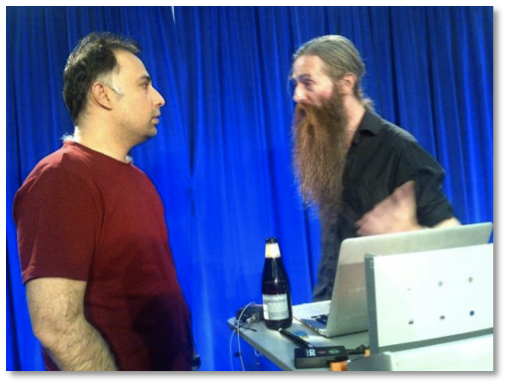
Most amazing part of the Singularity Summer
has been a close interaction with visionaries like Peter Diamandis and Ray
Kurzweil. It’s an immense pleasure to see the aura of passion for technology-change
for good in them, that it is nothing less than infectious.A Singularity University alumnus & AIIMS Health innovation Awardee, the author with more than two decades of healthcare experience shares his experience & insights on healthcare & other topics. He has been COO at Jaslok Hospital & Research Centre & founder of a NASSCOM 50 Emerge startup
Tuesday, September 4, 2012
Singularity Summer
Most amazing part of the Singularity Summer
has been a close interaction with visionaries like Peter Diamandis and Ray
Kurzweil. It’s an immense pleasure to see the aura of passion for technology-change
for good in them, that it is nothing less than infectious.Monday, May 14, 2012
Insurance dilemma and the outstanding billing issues.
In the United States the recent trends indicate that the uninsured population is rising and is at a high of 17 to 20% of population left uninsured. There the problems are very different and law suits against patients are common for un-paid bills which run in millions. Hospitals are also being sued by patients for aggressive payment collections methods for defaults and news articles are many citing incidents of payment sleuths from hospitals asking for money inhumanely in the emergency rooms from the uninsured.
Well the scenario is different here in India.
The insurance reach is less than 2%. And majority of payments are out of pocket.
However widespread grievance by a lot of INSURED patients is a little different.
They complain of jacked up prices when they informed the hospital that they were eligible for cash less services.
According to a recent survey as cited in Forbes, when the pricing for hospitalization was compared between insured and uninsured there was a striking upward billing of upto 40% for insured patients in comparison to cash paying patients.
This indicated obvious unethical billing and suspected collusion with many TPAs. This was bound to force many insurance companies to do away with TPAs and fixing certain costs of procedures.
The matter will only worsen over a period of time and will further lead to a disillusionment of patients from Insurance due to such instances and hassles, and the insurance penetration will not rise to a desired level.
With inflation and cost of health care rising, problems are going to worsen a lot leading to unutilized beds and non-competitive revenues and EBITAs. The problem of un-paid bills from TPAs to the hospitals and individual patients is on the rise. The reasons are many for the same but leads to a situation where either patients stay away from such hospitals, hospitals stay from such
TPAs and Patients stay away from getting insured.
However there is enough time to bring in trust among stakeholders:
Hospitals should look at long term solutions to acquire patients and not give into unethical referrals. Today majority of the hospitals pay 20% as referral fee, the competition will pay 30% tomorrow, and then how long will you up the scale? Effort based engagement with patients will build trust and cost of acquisition will be much lower. Leading to higher profit centres.
Hospitals should keep the tariff standardized for all kind of patients for the same class of beds. It should not change from opportunity to opportunity. The pricing for insurance too should not change.
In the long run Insurance companies will prefer such hospital who do competitive and standardized billing. Many hospitals now doing away with bed class wise exponential billing and only charge extra for the room type and not the services. This makes all stakeholders happy.
Hospitals should invest time in making good all-inclusive packages with no variable. Its not that it can't be done. This will increase trust and competitiveness.
Hospitals should list their prices transparently and on all its communication channels including the website.
Hospitals should not take legal action against any patient. This will be like axing ones own foot. It will only lead to bad publicity. A gesture of good-will shall create a word of mouth to compensate for your loss if any.
Train your staff, specially the billing and customer care. A nice gentle but persistent followup with patients or relative every day reminding of their outstanding will sort out billing issues in majority of cases.
It is advisable that a tactful dedicated team (depending on the size of hospital) be assigned for such tasks.
Focus on 'Customer satisfaction'. That is what will make you survive in the business of healthcare.
Remember patients are only becoming more educated and informed.
Sincerely,
Dr Akash S Rajpal
MD & CEO,
EKOHEALTH Management Consultants PVT LTD,
Mumbai
Awardee, Ramanujan Bose Award 2012: http://www.ramanujan-bose-prize.org/#!2012-prize
Feature on Young Turks-CNBC: http://t.co/hkzEzeDY
Feature in Entrepreneur Magazine: http://scr.bi/HrBQSf
Feature in Business India Magazine: http://scr.bi/HltyQa
Feature on CNBC Awaaz: http://bit.ly/H9jdTF
---------------------------------------------------------------------------------------------------------------
EKOHEALTH website & blogs: http://www.ekohealth.in
Ekohealth @ Linked in : http://linkedin.com/company/ekohealth
Facebook : http://www.facebook.com/ekohealth
Twitter: http://twitter.com/ekohealthindia
Wednesday, April 18, 2012
Gold out of dust
My take:
I guess unless govt is healthcare provider friendly there will not be many takers for creating a good quality health setup. Govt seems to become greedy when a pvt setup creates gold out of dust. The case seems to be duplicated in almost all professionally run centres now - seven hills, fortis vashi & others whoa re all in some trouble even with agreed MOUs. Govt needs to realize that no pvt setup will be there without profits for self sustenance even if it is a trust run centre. All prudent establishments who don't want to run on donations will want a self sustenance model. Govt should be happy that its city has such brilliant health setups catering to their obligation towards its citizens of providing excellent health facilities which they fail to do on their own.
Dear Govt, please be supportive of all who want to provide a brilliant setup &, please hand hold them. Make it un-bureaucratic, attractive, & un interfering so more private enterprises show willingness to invest in great quality health setups & ultimately providing world class healthcare to all with investments & maintainence from government.
Dr Akash S Rajpal
MD & CEO
Ekohealth Management Consultants PVT LTD
Feature on Young Turks-CNBC: http://t.co/hkzEzeDY
Feature in Entrepreneur Magazine: http://lnkd.in/PwN4H4
Feature in Business India Magazine: http://www.scribd.com/doc/82435630/
Feature on CNBC : http://youtu.be/Nh5vpH_SErE
Website:
www.ekohealth.in
Linked in :
http://in.linkedin.com/in/akashrajpal
Facebook :
http://www.facebook.com/ekohealth
Twitter:
http://www.twitter.com/ekohealthindia
Sent from a Blackberry Device.
This communication is for intended recipients only. Standard confidentiality and nondisclosure clauses applicable.
Tuesday, April 17, 2012
Is marketing a healthcare provider ethically also 'ethical?
I said that someone had to begin ethical medical practice as unethical practice of referral fees is degrading the competence & faith in such a lovely profession.
On this many practitioners put forward their pain points on how difficult it is to get patients without referral fees.
Obviously, much of medical establishment is driven by doctors turned owners. Almost all of them are uncomfortable working for 'others'.
This creates a problem. Almost none of them get time to write about their good work, give adequate attention to patients & this leads to a degrading practice over a period of time. Such doctors who were busy earlier are find lesser patients coming to them in many centres. They never invested in themselves.
They never took opportunity to 'brand' themselves through publishing articles, creating patient forums, taking customer feedback & thus loosing an opportunity to act on it for appropriate course correction.
This also leads to a desperate 'spegheti' marketing & advertisement which is unethical in a lot of ways, but also unfruitful. So I have always propagated my belief of handholding your patient as a 'customer' who expects 'satisfaction' like any other purchase of a product. Today customer is smarter than before & therefore the patient too, as they both are the same.
One elderly gentleman during my interaction pointed out that in this case even writing articles, telling people how many amazing surgeries you have done, clinical outcomes etc is also 'marketing' & is therefore unethical. And he was very uncomfortable with patient being termed as 'customer'.
On this I deliberated that doctors are themselves to blame for it. They made patients customer the day they started encouraging a 'referral fee'. This ultimately made costs higher & patient started counting value for the buck. This also paved way for more professionally run corporate setups.
I told him that its absolutely fair that one's achievement be known to patients, else how would he know?
And unless you write on internet or contribute to various publications sharing your research outcomes, & learnings from the experience how would your peers & patients know you exist. Writing well would increase confidence among all stakeholders & create ethical peer referrals & direct patients.
I think he was convinced in the end.
Dr Akash S Rajpal
MD & CEO
Ekohealth Management Consultants PVT LTD
Feature on Young Turks-CNBC: http://t.co/hkzEzeDY
Feature in Entrepreneur Magazine: http://lnkd.in/PwN4H4
Feature in Business India Magazine: http://www.scribd.com/doc/82435630/
Feature on CNBC : http://youtu.be/Nh5vpH_SErE
Website:
www.ekohealth.in
Linked in :
http://in.linkedin.com/in/akashrajpal
Facebook :
http://www.facebook.com/ekohealth
Twitter:
http://www.twitter.com/ekohealthindia
Sent from a Blackberry Device.
This communication is for intended recipients only. Standard confidentiality and nondisclosure clauses applicable.
Wednesday, January 11, 2012
Marketing your medical centre for free & get 20% more patients
Well the above mention was nothing but a small gesture of welcoming you to my world of blogs.
Well similarly, the same is expected of a medical centre. Just putting a smile, doing a namaste and welcoming a patient into your premises is the least bit any medical centre can do. This elicits a response - positive mind frame, and let's the patient open up to you in a more receptive way.
Background: I was invited as a panelist at a conference on ways to improve patient productivity (turnaround) in Nagpur recently.
It was pleasure to share the dais with luminaries of the industry like Mr VP Kamath COO of Wockhardt hospitals, Dr Vedprakash Mishra - Pro chancellor of Datta Meghe Institute of Medical sciences, Dr Mr & Mrs Gode, Dr V Ranjan- Director at HMI KEM hospital Pune, and of course, interact with bright energetic hospital management students - the leaders of tomorrow.
So, taking the insights forward, this blog post shall highlight some key ingredients to increase productivity in a medical centre - be it a hospital, nursing home, day centre or even a diagnostic centre. And the best part is - one can improve productivity by almost 20% and more by just doing the things below which does not cost anything. No advertisements required, no publicity, no unethical cut practice. Just sheer WILL and PATIENCE.
1. Greet all customers: But the catch is - the greeting should be felt from within and should show on face. There is no language barrier to greet. A simple namaste does the trick. In all areas this gesture should be followed. Be it a nurse caring for patient, or doctor examining, housekeeping cleaning the room or security frisking you. This however needs to match your action. Just plain greeting is not enough. Your gesture to welcome indicates that patient is a guest and you will take good care. So if there is a problem then it should be immediately 'looked into' without being defensive. (Discussed later in blog)
The best way to inculcate this habit is the initiative starting from ceo/trustees directly. They should start greeting even the housekeeping boys, doctors, nurses etc themselves. This shock of a gesture will embarrass all into following the same habit.
2. Take complains very seriously: To begin with you should have a strict command chain which makes it mandatory to collect feedback from 'all' patients. Though difficult, but needs to be done. An internal objective number of feedback's collected can increase month on month and can be linked to performance appraisals. Start off with a small sample size. All feedback forms should reach CEO 'after' root cause analysis and action taken. This process though has to be very prompt. CEO should create a environment among his employee to do this. The pretext of all complains should be handled with philosophy that ' All customers are right. And if customer is wrong, you led him to be that'
3. Display internally created publications: Well always remember one thing. Patient does not want to come to a hospital. Its a unavoidable need. So patient is not looking to be entertained there. He just wants to be treated, and well. So avoid keep entertainment magazines in your premises. On the contrary the only publication which should be there for people to read is your own. Why should you promote anyone else other than your organization and people in your own premises without getting paid?
There are many patients in this country who do not get medical
insurance even if they wanted to. Health Insurance does not cover
senior citizens, and those with pre existing diseases like Diabetes,
cancer, etc, and such patients end up with huge medical bills. These
patients are the ones who have to get blood tests done more
frequently, visit doctors more often, and get admitted more
frequently.
Ekohealth strives to help such patients numbering between 100 and 200
million in this country.
Ekohealth has tied up with various hospitals, clinics, diagnostic
centres, chemist shops, dental clinics, cosmetic centres and ambulance
services. Ekohealth members can avail from 5 to 50 % of discounts on
various services at these centers. Ekohealth has tied up with Bombay Hospital, Saifee Hospital, Yash Birla group of medical centers, Nova Day care, Life care, 1298 ambulance, Nirmaya, Rajpal geriatric nursing care, and many more.
There is no age limit to become a member and any person with any
disease or otherwise can join ekohealth. There is no limit on using
the membership card and can be used any number of times.
Youngsters who are insured can also benefit with ekohealth membership
as they can now avail services in OPD like dental care, maternity care
etc at discounted rates. Insurance does not cover OPD expenses like
executive health checks, Maternity child birth etc.
Corporates can buy ekohealth memberships for their employees to extend
an existing insurance scope and reduce expenses on medical
reimbursements. They can also extend this facility to the parents of
the employees who are normally not covered any corporate insurance.
Ekohealth becomes a single corporate like setup for individual
patients who can collectively bargain for better rates for common
ailments.
Insurance will be the biggest beneficiary as they will not have to run
around to get hospitals to offer discounts and their reimbursements
will be lesser saving them millions in cash payouts to patients.
To know more about Ekohealth write to me, call our toll free number
1800 2094 356 or email at benefit@ekohealth.in
Tuesday, January 3, 2012
Short sighted governance
Sincerely,
Dr Akash S Rajpal
MD & CEO,
EKOHEALTH Management Consultants PVT LTD
---------------------------------------------------------------------------------------------------------------
EKOHEALTH website & blogs: http://www.ekohealth.in
Ekohealth @ Linked in : http://linkedin.com/company/ekohealth
Facebook : http://www.facebook.com/ekohealth
Twitter: http://twitter.com/ekohealthindia
Friday, December 9, 2011
Why this kolaveri kolaveri di??
Well I got this interesting piece of insight from a friend of mine who runs distance education programs.
The insight is true to fact and as the placement seasons for the healthcare management students are round the corner, this should help.
Do thank me for this post if you land up with a great job after reading this.
And if you don't get that job you can always sing kolaveri (translated as why this murderous look?) Or give one instead. :)
Enjoy.
Dr. Akash S Rajpal
If you haven't already listened to "Why This Kolaveri Di", please do
so before you proceed any further:
http://www.youtube.com/watch?v=YR12Z8f1Dh8
If you have listened to it, then you contributed to the 18 million times this tamil movie song has been viewed in the last 23 days. Why this Kolaveri Di' offers important lessons (I am serious!) for all of us preparing for upcoming interviews and career changes
1. Highlight your strengths
The word "Kolaveri" is repeated 34 times in the song. Yes, 34 times in a 4 minute song. Like the song or hate the song, but its impossible to get that word out of your head once you have watched the full song.
At the end of a 30 minute interview, it is critical that the interviewer leaves the room with 1-2 words in his/her mind to describe you. Otherwise you will not stand out from your competition. It doesn't matter if you have topped your class, debating champ, state cricket player, national talent test winner etc etc. Unless you reiterate your 1-2 key strengths throughout the interview, you stand the risk of being washed out in a sea of words. A helpful practice is to write down a few things that you must absolutely convey during the interview. Keep that list in front of you during the interview and refer to it and make sure its done.
2. Structure your answers
In the song, Dhanush spends the first two minutes describing the girls state of mind (kolaveri). He then spends the next 40 seconds describing the girls looks (white skinu, heart blacku). The next 1 minute is spent on describing his own state of mind (kaila/handla glassu, empty lifeu).
Similarly, in your interviews, it is very important that you present your answers in a structured analytical manner. Don't confuse your interviewer by jumping from one topic to another. For example, the best way to answer a question such as "Why are you the best person for this job" is to say something like "I think this job needs expertise in 3 domains – a,b & c. I have expertise in 'a' because of experience 1, I have expertise in 'b' because of experience 2, I have expertise in 'c' because of experience 3. Hence I think I am qualified for this job". Your interviewer will appreciate the effort you are putting in to structure your answer and it also conveys that you have clarity of thought and are organized.
3. Add Appeal / Tell a Story
Can anyone tell me why is Shruti Hasan (the cute girl in olive green top) in this video ? I can understand Aishwarya Dhanush in the video even though she is not singing – she wrote the song. If I had to dare a guess, Shruti Hassan is an excellent image for the "white skinu girlu whose eyes meetu with soup boys"
If you are interviewing for a highly competitive job like the ones in finance, consulting etc, all your competitors are smart, well educated, articulate and hard-working. How are you going to stand out, so your interviewers remember you after meeting 100 other candidates – weave a story, tell them how your experiences have crafted you, why you and only you can help them conquer the world, show them a little bit of themselves in you, tell them why you think your higher purpose is their industry (it better be true, else your life will be miserable once you get the job!)
4. Keep it Simple
Boy meets girl, boy and girls eyes lock, boy thinks girl loves him, girl barely noticed him, boy is heart-broken!! "Why this Kolaveri Di" is based on a storyline that has unfailingly powered tens of thousands of movies, TV serials, books and articles.....not to forget thousands of real life stories that draw inspiration from these works.
Don't over-complicate your answers. Especially in industries such as finance and consulting where presentation is as important as content, it is really important that people understand what you are saying as against you saying a bunch of super-smart sounding stuff that your interviewer can't comprehend. A great way to implement this, is to start your answer with a couple of simple statements and then gradually build in complexity as you proceed with the answer. Your interviewer will stop you, if he/she has heard enough.
In the time it has taken you to read this article "Why this Kolaveri Di" has been viewed another 300,000 times on Youtube!
Good Luck with your interviews!
Binny
Co-founder & CEO
www.Dezyre.com - Online University
Sent on my BlackBerry® from Vodafone
Monday, September 26, 2011
PPP - Its always prudent to outsource (ref pvt labs in public hospitals-Mumbai)
Though there is always a negative speculation by the narrow minded administrators and ignorant consumer that the costs would go up for the common man, its actually otherwise.
I had outsourced many critical departments while working as administrative officer at NMMC way back in early 2000's. My initiatives were also lauded and featured by European commission's PROD india compilation of PPP initiatives in the country to replicate.
We had outsourced Imaging, housekeeping, laundry, kitchen and many more departments ultimately culminating to the most talked about 'Hiranandani Fortis NMMC' multispeciality tertiary care hospital(this project is facing certain hiccups on lines of seven hills, but should ultimately resolve as its a win win deal for both parties. Its a sincere suggestion to both not to let go this project in larger interest of both parties and the junta at large. This project just needs a little extra willfull support from either parties and will benefit both in long run)
I recently met the outsourced partner for the imaging centres and he was surprisingly pleased at the long lasting relationship with NMMC which lasted almost 5 to 7 years as per terms of contract.
I remember our equipments earlier used to fail, there was shortage of staff, training was always an issue and the patients anyways had to be referred to outside centres for imaging. Recruitment and maintainence requests always used to get lost in bureaucratic approvals and budgetary constraints.
Our negotiations with the outsourced partner not only enabled maintained equipment and optimized strength of staff, but resulted in one 5th to tenth of rates from then prevailing market rates as the volumes based incentives were built in.
I have always believed that government should never use public money on capital infrastructure and should use it on efficient monitoring mechanism for optimal outputs.
The lethargic and unavoidable red tapism and bureaucracy will always slow the process of approvals and decision making to run the systems in streamlined manner, as every one always reels under the fear of getting implicated in some corruption or favoritism charges. So the tender process, policies etc end up being so difficult that the Maintainence of equipment, recruitment of staff etc always remains an issue and leads to a failed operations.
The outsourcing is the key to success not only in labs but in every area of operations. Government needs to just tighten the administrative and monitoring mechanism and build practical policies and attractors for the outsourced partner.
If one does a study on cost of 'ownership' of self owned vs outsourced, government would be surprised to realize that a PPP costs less to the government than managing things on own.
Government should be only involved in making right far sighted policies and should entrust everything to the private players with appropriate monitoring mechanism in place.
PPP ultimately will lead to drastic reduction in corruption, and probably a reason for resistance among the babus and politicians. :)
Dr Akash S Rajpal
Founder, MD & CEO
Ekohealth Management Consultants PVT LTD, Mumbai
Sent on my BlackBerry® from Vodafone
Sunday, August 21, 2011
Kickbacks & unethical cut referral medical practice. An Anna Hazare Movement in healthcare desperately required.
Sorry to say (and probably upsetting few of my industry colleagues), but the cut-practice is so ugly now that a majority of physicians now charge a referral fee upto 50% of patients bill from the treating hospital to refer a patient.
So what happens then?
This referral fee gets added to patients bill and rises the healthcare costs.
It is a well known fact that the EBITA's in healthcare is low. Ironically even with a huge bed deficit many hospitals and clinics struggle to attract a good productivity in the initial years. There are various reasons for that (will discuss that in detail in another blog soon). But the low productivity makes these providers desperate and succumb to cut practice.
One major reason for low productivity is that typically the patients rely a lot on the primary care physician (friendly neighborhood Doctor ) who has such an immense rapport with his patient that he is virtually a friend, mentor and guardian angel to them. So whatever this family doctor says is followed. So this family doctor now can dictate and channelize where (hospital/diagnostic center & even chemist) these patients would ultimately go!
The family physician (majority of them) have made this opportunity so ugly, that what could have been a patient friendly exercise to negotiate economical deals and quality for benefit of their loyal patients, has actually become a business to extort money from the hospitals and other healthcare providers & ultimately cheat the poorly informed patient. If the provider (hospital etc) does not succumb to pay the referral fees, the 'ethical hospital' is bad mouthed and the patient does not go to that hospital on fear of 'bad quality' as informed by his doctor.
This referral fee practice or popularly known as CUT (also mentioned as Cee Yoo Tee) is to the tune of 50% of patients total bill.
The referral fee has now become such a mindset & walk of life for the medical practitioners that even the specialists have started asking for referral fees. Many Orthopedic surgeons ask for a referral fee from a physiotherapist, an Anesthetist is asked to pay a preference fee by his surgeon, and many Chemists pay the local specialist a fixed monthly fee to keep on receiving patients from the busy practitioner for medicines.
Pharmaceutical companies are well known to buy cars, fund doctor's children's education and carry out an entire revamp of doctor's clinic to prescribe expensive branded drugs for which a cheaper generic is also available.
If the above is taken care of, the patients bill can reduce to the tune of 50%.
Even insurance companies bleed. They end up paying higher reimbursements to the patients/hospitals.
This needs to stop on urgent basis as patients don't realize that to cover the expense on cut practice, many hospitals and diagnostic centers end up conducting unwanted tests or even 'ghost tests' where a report is only generated without even running the tests.
Ekohealth (www.ekohealth.in) is a company which has started a very ambitious health savings program in India to counter the above mentioned evils of referral practice.
Ekohealth is striving to make the member patients more aware (with help of such blogs and newsletters) and encourage them to visit a specialist or a hospital directly without any references.
The patients are finally getting educated and Ekohealth wants to ignite this further so that they can 'engage with their doctor and healthcare provider better'.
This will not only help patient demand better rates, but ethical and quality treatment.
I know this is a very difficult task, but everything starts with a vision.
Do forward this post to as many people as possible and help educate patients to encourage them to make fearless and better informed decisions.
I hope the Anna movement transcends into healthcare too. 'Ekohealth' supports Annaji.